

Whitewashed Tombs Were Not Hiding Death
Why Jesus Was Calling Them Something Worse Than Hypocrites

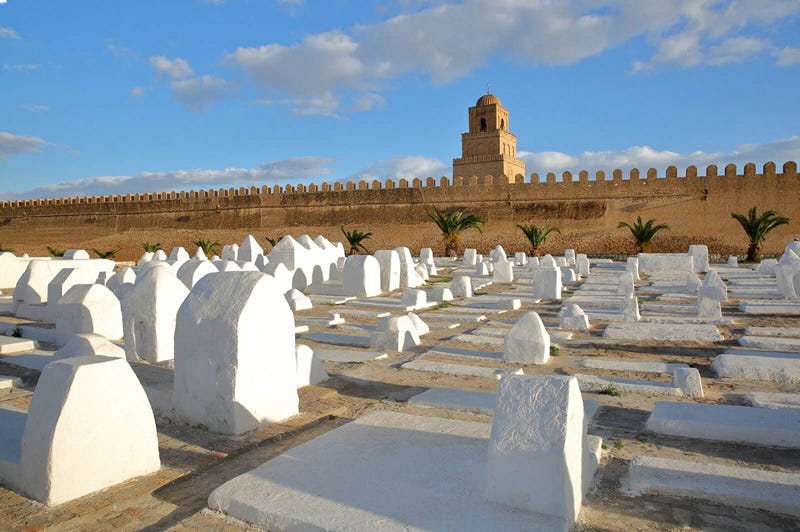
The phrase is familiar enough to feel obvious. “Whitewashed tombs.” Clean on the outside, dead on the inside. Most people hear it as a simple charge of hypocrisy, and it is that. But in Jesus’ world, whitewash was not there to hide death. It was there to reveal it.
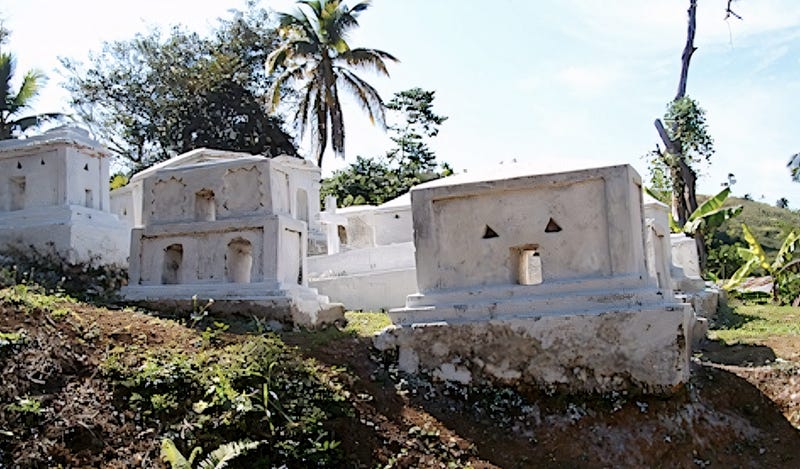
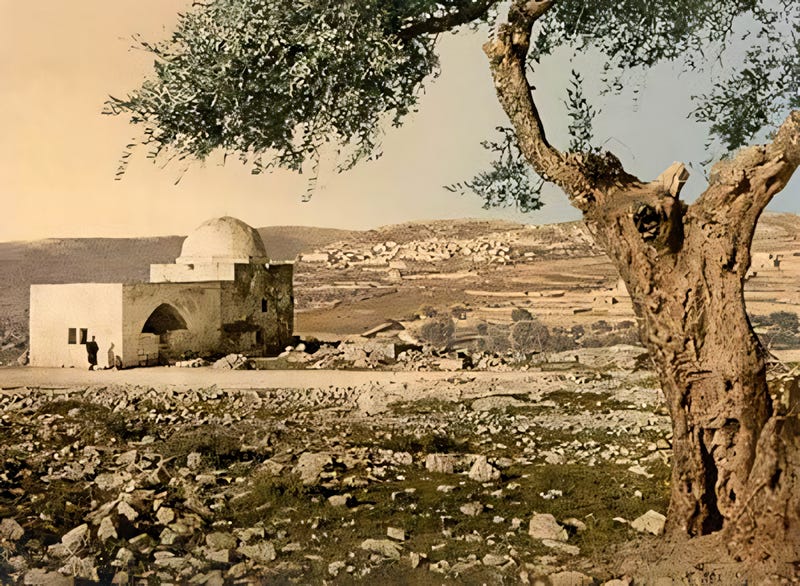
A few weeks before Passover, the roads leading toward Jerusalem began to change. Tombs near the pathways were coated with whitewash, a thin mixture of lime and water brushed over stone until it dried pale and bright against the ground around it. The whitewash was a warning.
Pilgrims were coming from across the land to worship at the Temple, and under the law of Moses, contact with a grave could make them ritually unclean for seven days. One wrong step near an unmarked burial place could keep a traveler from participating in the festival. So every spring the tombs were whitened before the crowds arrived, and every spring the whitewash had to be reapplied. It was ongoing labor, a maintenance ritual the community renewed year after year to keep pilgrims safe.
The Mishnah, the written collection of Jewish oral law compiled in the early centuries after Christ, records that on the first of Adar, roughly a month before Passover, public announcements were made about several matters, and the whitewashing of graves was among them (Shekalim 1:1). Tens of thousands of pilgrims traveled to Jerusalem from Judea, Galilee, the Transjordan, and Jewish communities beyond the land, including places as far away as Babylon and Egypt. They needed to arrive ritually clean. A gleaming white surface along the road was a sign.
A whitewashed tomb communicated one thing: death is here. Stay away. That is the image Jesus chose when He looked at the scribes and Pharisees and said:
“Woe to you, scribes and Pharisees, hypocrites! For you are like whitewashed tombs, which outwardly appear beautiful, but within are full of dead people’s bones and all uncleanness. So you also outwardly appear righteous to others, but within you are full of hypocrisy and lawlessness.” (Matthew 23:27–28, ESV)
More Dangerous Than Hypocrisy
Most people hear that as a simple accusation of hypocrisy. Clean outside. Rotten inside. A religious fraud hidden behind a polished surface. That reading is right as far as it goes. But the image goes further. Jesus was calling them something more dangerous than fakes. He was calling them sources of contamination.
A whitewashed tomb existed for one reason: to warn people away from defilement. The ritual was written into the law of Moses, and violating it carried real consequences. Numbers 19:16 states plainly that anyone who touches a human bone or a grave in the open field becomes unclean for seven days. The purification process that followed required the ashes of a red heifer, the involvement of a ritually clean person, and a waiting period that could not be shortened. The whitewash existed to prevent all of that. It kept pilgrims at a safe distance.
Then Jesus takes the image and inverts it. The Pharisees, He says, are the tombs. They look clean and bright on the outside. People see them and assume they are safe, righteous, and trustworthy. But the inside is full of death. That is what makes the image so severe. The whitewash along the pilgrim roads did its job. It warned people off. The Pharisees look like something that should warn people off, and they draw people in instead. The polished exterior of a Pharisee attracts what it should repel. People come close, follow them, imitate them, absorb their teaching, and walk away contaminated without knowing they have touched death.
Luke’s parallel account makes this dimension explicit. There, Jesus compares the Pharisees to unmarked graves, the kind people walk over without knowing they are there (Luke 11:44, ESV). The two images work from different angles toward the same accusation. In Luke, the contamination is invisible. In Matthew, the contamination is disguised as something beautiful. Either way, the traveler ends up unclean.
That is the terrible irony. These were the men in Israel most concerned with avoiding impurity. They built fences around the law to keep defilement at a distance. They washed their hands, avoided Gentile contact, tithed with mathematical precision, and guarded the boundaries of clean and unclean with relentless care. And Jesus tells them, with the entire crowd listening, that they themselves are the unclean thing. They are the hazard they spent their lives trying to avoid.
The Men Who Knew Better
Jesus was speaking to men who knew exactly what whitewashed tombs were for. The scribes were experts in Torah, trained to interpret the law and apply it to daily life. The Pharisees were not priests, but a movement of religiously serious laymen devoted to holiness, Torah observance, and ritual purity. These were serious men, publicly and visibly committed to faithfulness. In a culture built on honor and shame, where public reputation carried real social weight, their visible righteousness made them figures of authority and respect.
Jesus was speaking from inside the tradition, as a Jewish teacher addressing Jewish leaders about the God of Israel. His “woe” formula echoes the prophetic oracles of Isaiah and Ezekiel, where God speaks in grief and judgment against leaders who have failed the people they were supposed to protect. The Greek word ouai, like its Hebrew counterparts in the prophetic literature, carries both judgment and lament. Jesus is grieved. He sees what the whitewash is hiding, and He knows what it is costing the people who follow these leaders, trust their teaching, and imitate their example without realizing what lies underneath.
By the time Jesus reaches the seventh woe, in verses 27 and 28, He has already told these men that they shut the kingdom of heaven in people’s faces, that they devour widows’ houses, that they strain out gnats and swallow camels, and that they clean the outside of the cup while the inside is full of greed. Each accusation builds on the one before it. The whitewashed tomb comes at the climax of the sequence.
Hypocrisy and Lawlessness
The metaphor in verse 27 is vivid on its own. Verse 28 turns the image into a diagnosis: “So you also outwardly appear righteous to others, but within you are full of hypocrisy and lawlessness.” The diagnosis hangs on those final two charges. The first is hypocrisy, from the Greek hypokrisis. The word has roots in the theater. In the Greek-speaking world, a hypokritēs was an actor, someone who wore a mask and played a role on stage. By the time of the New Testament, the word had moved beyond the theater into moral language, describing someone whose public presentation did not match their inner reality. In Matthew’s Gospel, the word carries a consistent force. Jesus uses it for a pattern of deliberate spiritual performance, religious behavior designed to be seen by other people and calibrated for their approval.
Matthew 6 makes this explicit. When you give to the needy, Jesus says, do not announce it with trumpets “as the hypocrites do in the synagogues and in the streets, that they may be praised by others” (Matthew 6:2, ESV). When you pray, do not stand on the corners “as the hypocrites do.” When you fast, do not disfigure your face “as the hypocrites do.” The pattern repeats three times in a single chapter, and it reveals the precise nature of the problem. The Pharisees’ religious life had become a performance aimed at a human audience. They were playing a role. And the audience was not God.
That is why verse 28 adds the small but devastating phrase tois anthrōpois, “to people.” You appear righteous to people. Their righteousness was real enough to be convincing on the outside, but its intended audience was human. It was designed to be seen. That is what makes it whitewash. It covers the surface without touching the interior.
The second word is more surprising: anomia, lawlessness. That is not the word we would expect. If Jesus had said the Pharisees were full of “sin” or “greed” or “pride,” the accusation would sting within the expected range. Lawlessness is a different charge entirely. These were the men most identified with the law. They studied it, taught it, memorized it, and enforced it down to the last detail. To accuse them of lawlessness is a paradox. It is an accusation aimed directly at the center of their identity.
But the paradox is the point. In Matthew’s Gospel, anomia describes a life set against God’s will while still appearing to honor it. Jesus uses the same word in Matthew 7:23, where He describes people who will stand before Him on the last day claiming they prophesied, cast out demons, and did mighty works in His name. His response is chilling: “I never knew you; depart from me, you workers of lawlessness.” The King James renders the phrase, “ye that work iniquity,” but the underlying idea is the same. These are people with impressive spiritual résumés, and Jesus calls them lawless. Their obedience had the shape of faithfulness, but not the heart of it.
That is what Jesus sees when He looks at the scribes and Pharisees. They had religious activity and discipline in abundance. Yet their inner lives contradicted the very law they claimed to guard. They tithed with mathematical precision but neglected justice, mercy, and faithfulness, the “weightier matters of the law” that Jesus names just a few verses earlier in Matthew 23:23. The outside of the cup was spotless. The inside had never been touched.
It would be easy to hear this and conclude that Jesus is against religious observance, that visible obedience is automatically suspect, or that anyone who looks faithful on the outside must be hiding something. But Matthew will not let us draw that conclusion.
Jesus has already made the distinction clear. He tells the Pharisees they should have done the weightier things “without neglecting the others” (Matthew 23:23, ESV). He tells His disciples to give, pray, and fast before the Father who sees in secret rather than before a human audience. In the Sermon on the Mount, He says their righteousness must exceed that of the scribes and Pharisees (Matthew 5:20, ESV). Visible righteousness was supposed to reveal a heart formed by God. In them, it had stopped at the surface.
Jesus is not talking about the person who truly wants to follow Him and still falls short. That person is struggling. The Pharisee Jesus describes is performing. The whitewashed tomb pictures a religious life built around being seen rather than being changed. It is the careful maintenance of an image while the heart remains untouched. That is different from honest weakness. A wound hurts and tells the truth. A mask hides what is wrong. The Pharisee wears the mask.
When Faith Becomes Whitewash
What Jesus describes does not belong only to the Pharisees. The whitewashed tomb shows what happens when the practice of faith becomes more concerned with appearance than truth. The question underneath a person’s spiritual life quietly changes. It is no longer, “What is true about me before God?” It becomes, “What do people see when they look at me?”
That change can happen slowly. It does not have to begin as deliberate deception. A person may begin with genuine faith, real devotion, and honest prayer. But over time, the outward signs of faith can start to matter more than the faith itself. The reputation grows. The expectations mount. Slowly, almost without noticing it, the life people see begins to outpace the life God sees. The gap is small at first, barely noticeable. But it widens. And the wider it grows, the harder it becomes to close, because closing it would require the one thing false righteousness cannot survive: being seen as you actually are.
This is why Jesus pairs hypocrisy with lawlessness. The danger is a person who still honors God’s law outwardly while refusing to let it search the heart. The outside still looks obedient. The inside remains unchanged. The law is honored with the lips, defended in argument, and displayed in public. But the heart, the place where Scripture says God actually looks, has been left untouched.
Psalm 51 captures what Jesus is calling for: “Behold, you delight in truth in the inward being, and you teach me wisdom in the secret heart” (Psalm 51:6, ESV). The God of the Bible has always cared about what is happening beneath the surface. He said it through Samuel when He rejected Saul and chose David: “The Lord sees not as man sees: man looks on the outward appearance, but the Lord looks on the heart” (1 Samuel 16:7, ESV). God is not fooled by the whitewash.
The uncomfortable truth is that the condition Jesus describes is most dangerous in the people who would never suspect themselves of having it. That is the nature of whitewash. It works. It convinces. It fools the people walking past, and it can fool the person who applied it. The Pharisees did not see themselves as tombs. They looked at themselves and saw beauty, order, devotion, and faithfulness. They saw everything the outside showed. And Jesus’ warning is that the very success of the exterior is what made the interior so hard to see.
“You appear righteous to people.” That is not the same as being righteous before God. The people saw the whitewash. Jesus saw the tomb.
That leaves us with a harder question than most of us want to ask. “Am I a hypocrite?” is easy to answer quickly and defensively. The better question is this: is there a gap between what people see when they look at my life and what God sees when He searches my heart? And if there is, how long has the maintenance of the outside kept me from looking honestly at the inside?
The question is meant to unsettle, not to condemn. Jesus exposes the condition, but Matthew’s Gospel does not leave us there. True righteousness begins in the heart and works outward. The Pharisees had learned to polish the exterior while leaving the interior untouched. Jesus calls His people to something deeper than whitewash. He calls them to truth in the inward being.
The cup in the verse just before this one tells the same story from a different angle. “First clean the inside of the cup and the plate,” Jesus says, “that the outside also may be clean” (Matthew 23:26, ESV). The order matters. Visible faithfulness matters, but Jesus is insisting that it be the overflow of a real interior life.
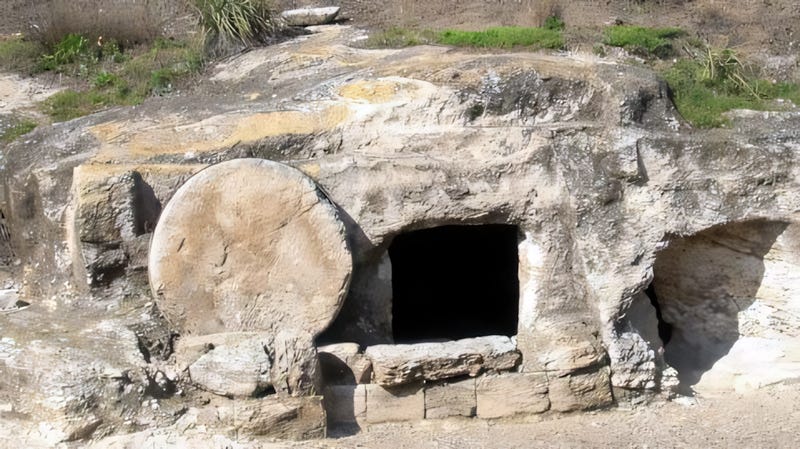
The whitewash along the Jerusalem roads did honest work. It told the truth about what was underneath. It warned people that death was near. The men standing in front of Jesus did something far more dangerous. They hid the death inside and called it righteousness.

Unearthed: The World of the Words Series
If you enjoyed this article, you may also want to read the other articles in this series:
Jesus Wept. Why Jesus Cried Before Raising Lazarus.
I Will Spit You Out. What “Lukewarm” Actually Meant in Laodicea.
Why Do You Wait? The Baptism Verse People Keep Fighting Over
The Father Who Ran. Why One Verb Changes the Whole Parable
The Camel and the Needle. Why the Famous “Needle Gate” Explanation Is Probably Wrong
Turn the Other Cheek. Why “Eye for an Eye” Was the Ceiling, Not the Floor
If you’ve found this article meaningful or benefited from my work here, consider making a donation or becoming a paid supporter to help sustain and continue it.
Superior work, as we've all come to expect from you, Jason. Thank you for the enlightenment to this subject.